

The Smarter Way to Do Sun Protection
Why locals are ditching the sunscreen-only approach
If you've spent any real time in the Colorado mountains, you already know the sun hits different up here. At elevation, UV exposure increases significantly — roughly 4% for every 1,000 feet — which means a bluebird day in Aspen isn't just beautiful, it's doing more damage than most people realize. The good news is that sun protection has come a long way, and once you understand how to layer it properly, it becomes second nature.
SPF vs UPF — What's the Difference?
Most people grew up reaching for sunscreen and calling it a day. Sunscreen (rated by SPF) works by absorbing or reflecting UV rays before they reach your skin — but it has one major limitation. It wears off. Sweat, water, and time all break it down, which means consistent protection requires consistent reapplication. On a long hike or a big day on the bike, that's easier said than done.
UPF-rated sun apparel works differently. Instead of a coating you apply, the protection is built directly into the fabric itself. A UPF 50 rated shirt blocks approximately 98% of UV rays for as long as you're wearing it — no reapplication, no missed spots, no forgetting. It covers the areas that sunscreen most often fails: your shoulders, the back of your neck, your forearms during a long descent.
Once people make the switch, they rarely go back to sunscreen alone.
Think of It as a System
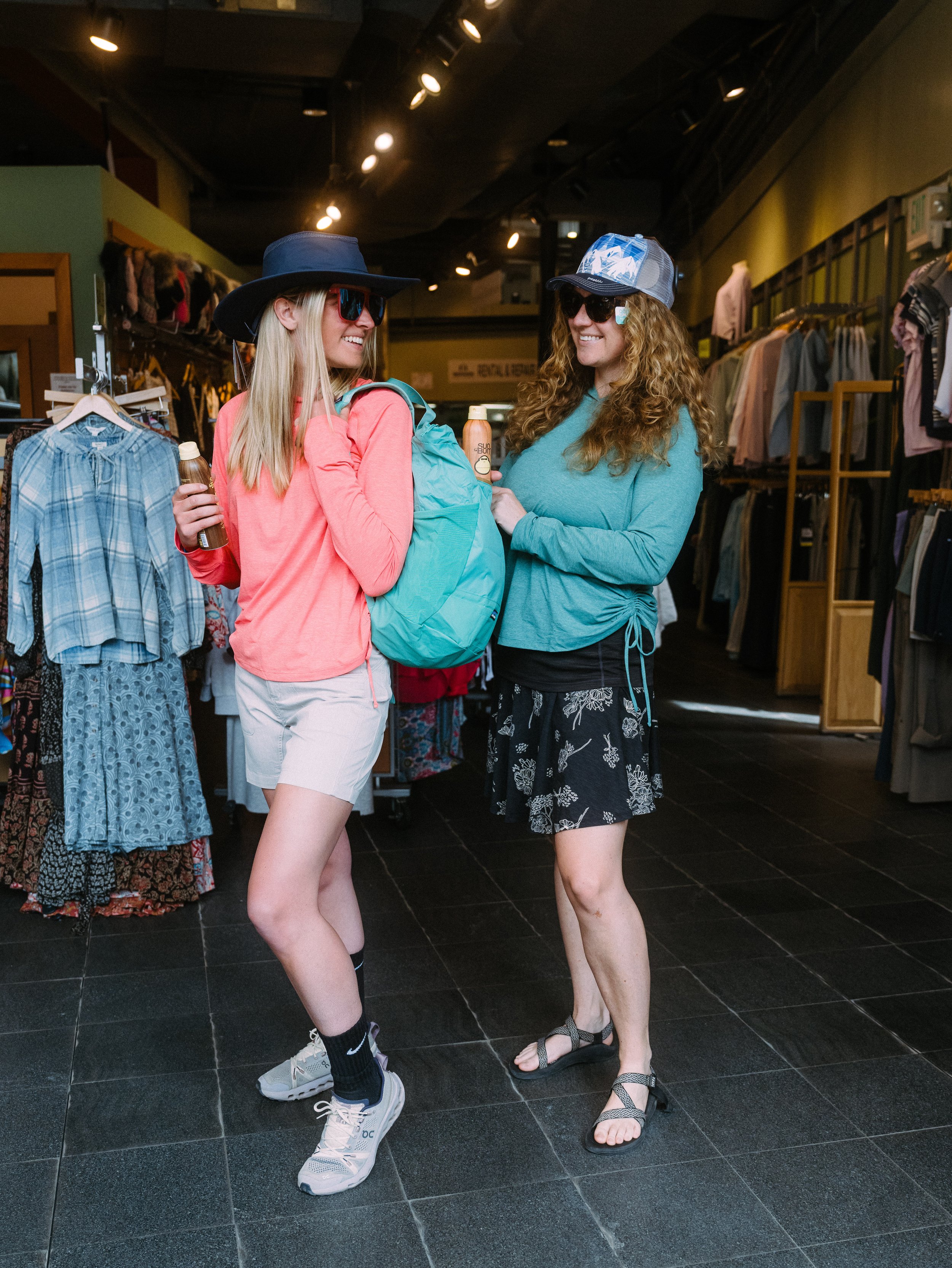
The shift in thinking that we see more and more among serious outdoor people is moving away from sunscreen as the whole solution and toward sun protection as a layered system. Here is how it breaks down:
UPF apparel is your foundation. A lightweight sun shirt covers the most surface area with zero maintenance. Today's options are remarkably breathable and fast-drying — there is no longer a tradeoff between protection and comfort. You put it on and forget about it.
Sunscreen fills the gaps. Your face, hands, and any exposed skin still need it. But when UPF fabric is handling the heavy lifting, you are applying sunscreen to a fraction of the surface area and reapplying far less often.
A wide-brim hat handles what a shirt can't. No sun shirt is going to shade your face. A quality wide-brim hat is one of the most underrated pieces of gear you can own for long days in the mountains — functional, packable, and genuinely effective.
Sunglasses protect more than you think. Cumulative UV exposure to the eyes is a real concern, and Colorado's high-altitude glare makes quality lenses non-negotiable. Polarized lenses reduce glare on snow, water, and trail surfaces — which is both a comfort and a safety issue on technical terrain.
The Bottom Line
Sun protection used to mean slathering on SPF 50 and hoping for the best. The smarter approach is building a system that works with how you actually move and sweat and spend time outside. UPF fabric as your base, sunscreen for the exposed spots, a brim hat on your head, and good lenses on your face. Head to toe, all day, without thinking about it.
At Ute Mountaineer, we've put together a selection of our favorite sun shirts, hats, and eyewear for the season ahead. Come in and we'll help you build your kit before the summer sun really gets going.
