The best alpine touring kit is not the lightest or the most expensive one. It's the one built around your feet, your terrain and the way you actually ski.
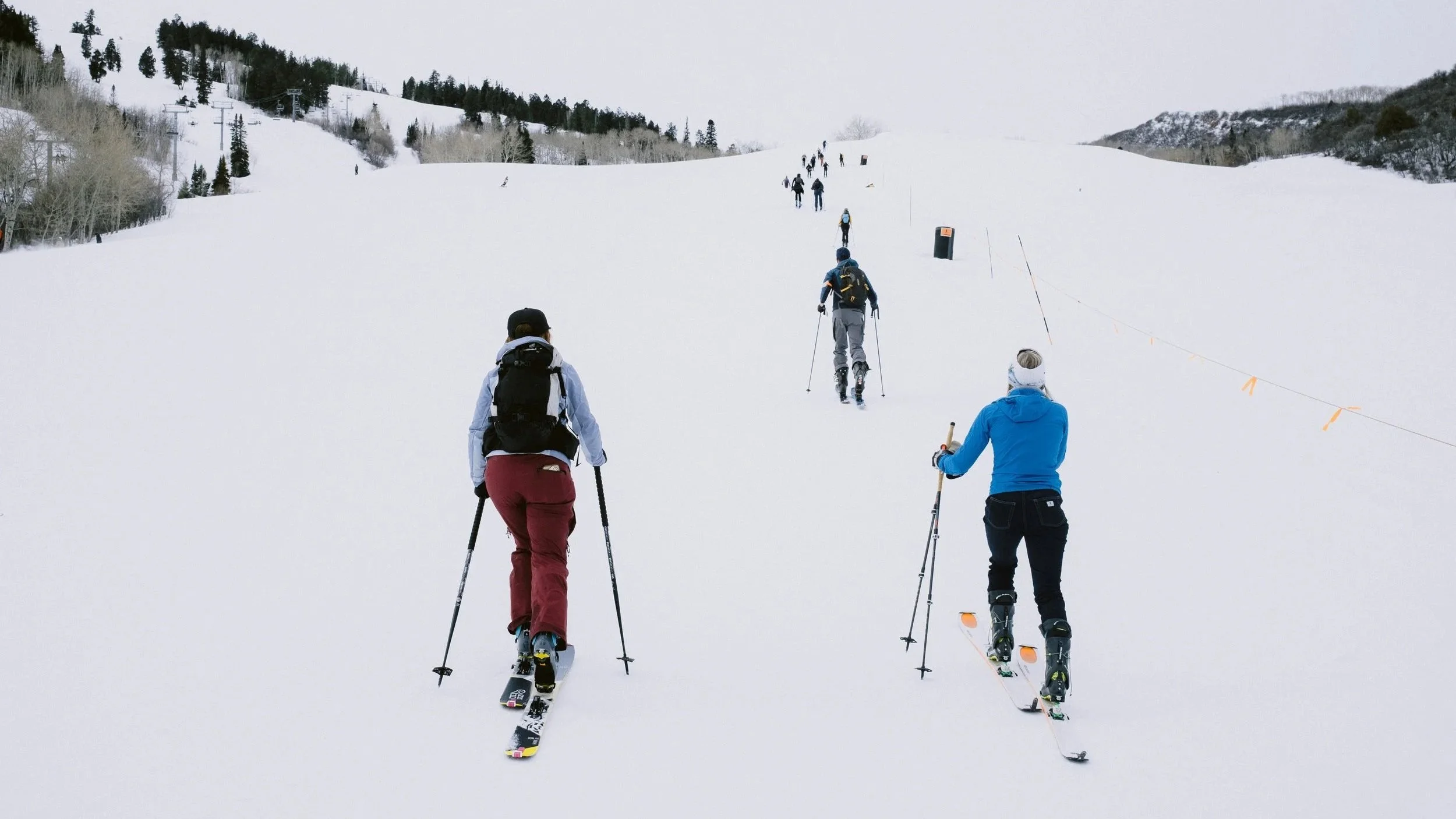
There's nothing quite like skinning up at first light, watching the sun hit the ridgeline, and dropping into fresh snow while the rest of town is still pouring coffee. Getting there takes more than motivation, though. It takes a setup that climbs efficiently, skis confidently and doesn't leave you limping back to the car with blisters.
Whether you're buying your first AT setup or upgrading a kit you've outgrown, this guide walks through each piece: boots, skis, bindings, skins and the safety gear that comes along for the ride. We'll cover what matters, where the tradeoffs are, and how to put it all together.
Think of your kit as a system
Every piece of an AT setup affects the others. A lightweight boot can't drive a wide, heavy powder ski. A burly frame binding cancels out the weight you saved with a light ski. A great ski with a boot that doesn't fit will still ruin your day.
Before you shop, ask yourself one question: where will most of my days be spent? Uphill laps before work, long tours in the backcountry, hut trips, steep lines, or a mix of all of them? Your honest answer will shape every choice below.
The boots: where every kit begins
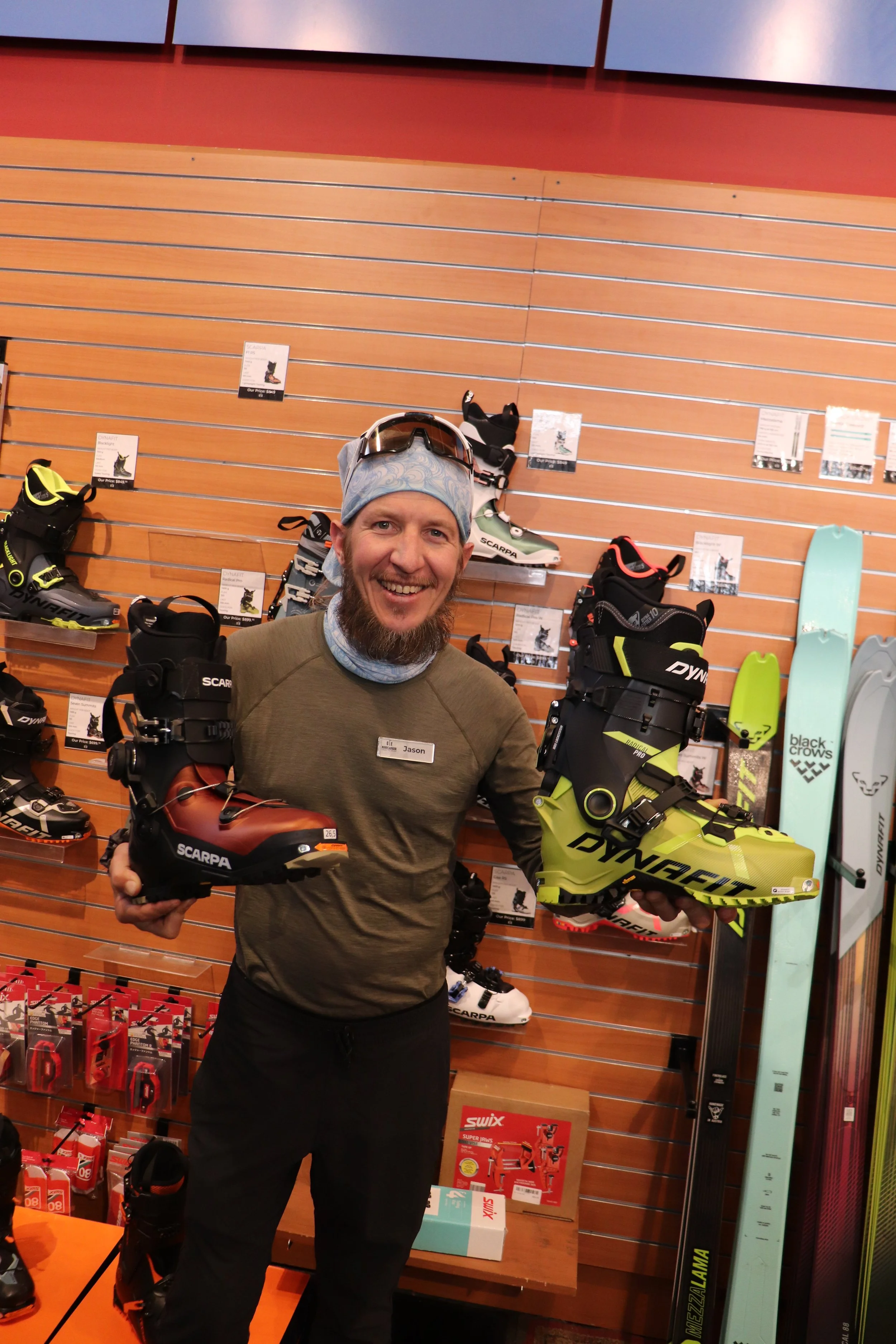
The best touring boot is the one that fits your foot. Specs matter, but a boot that pinches, rubs or lets your heel lift will make every climb harder and every descent sloppier.
What to look for
Weight. Touring boots range from very light race-style boots to heavier boots that ski much like a resort boot. Every gram on your foot gets lifted with every step, so the more time you plan to spend on the uphill, the more weight matters.
Walk mode and range of motion. A good walk mode lets the cuff pivot freely so you can take a natural stride. More range of motion makes long, flat approaches and steep skin tracks far more comfortable.
Stiffness (flex). Stiffer boots drive wider, heavier skis and feel more powerful on the way down. Softer boots are more forgiving and easier to drive, which is helpful in variable terrain, low angle pitches, and when you’re tired.
Transitions. Look for buckles and walk mode levers you can work quickly with gloves on especially if you’re planning a mission where you'll transition many times in a day.
Two broad categories
Light and fast boots are built for long days, big vertical and fitness-minded uphilling. They tour beautifully, but they work best with lighter, narrower skis.
Freeride touring boots are heavier and stiffer, with more power for steep lines and deep snow. Some skiers use them as their only boot, inbounds and out.
Why a boot fitting is worth it
Our boot fitters look at the length, width, volume and arch of your foot. They also ask about your hot spots, old injuries and goals. From there, we can mold liners, add custom footbeds and adjust the shell where it needs more room. A small fix in the shop beats a big blister 3,000 feet up the skin track.
Tip: Bring the socks you actually tour in, and come in later in the day when your feet are at their largest.
The skis: built for the climb or the descent?
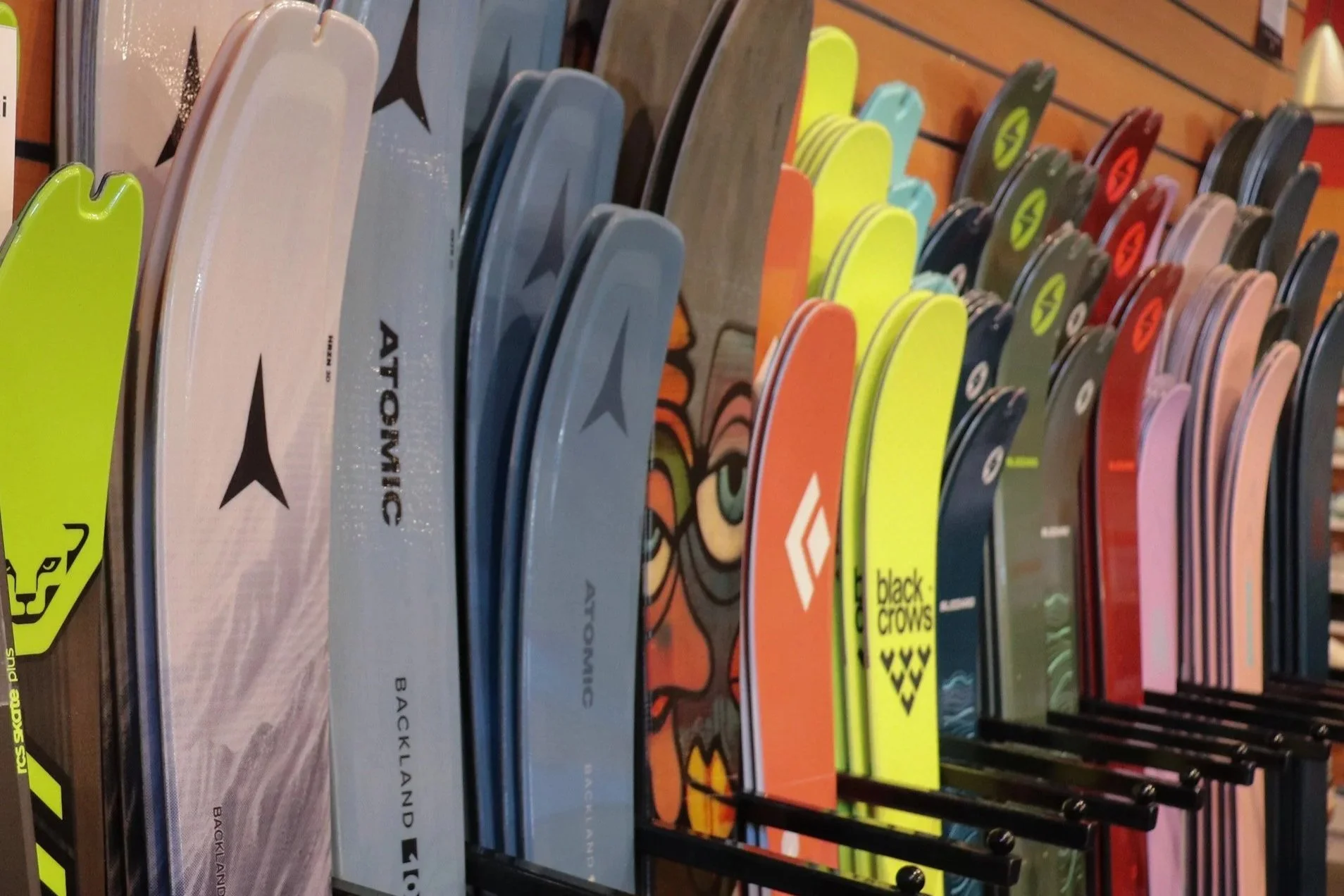
Every touring ski is a compromise between going up and coming down. Lighter skis make climbing easier. Heavier, wider skis feel better on the descent. The trick is finding the balance that fits your days.
The uphill-versus-downhill tradeoff
Uphill-focused skis are typically around 80–95 mm underfoot and very light. They climb fast, make kick turns easy and shine on long days, dawn patrol laps and spring missions. The tradeoff is that they can feel nervous in variable snow.
Downhill-focused skis are typically 100–115 mm underfoot or wider; they're heavier and more damp. They float in powder and stay stable through crud and wind crust, which makes them great for deep days, steep lines and aggressive skiers. The tradeoff is more effort on every step up and high widths can be a challenge fitting into set skin tracks.
Most skiers land in the middle, around 95–105 mm underfoot, with a ski that tours well and still has fun on the way down. Widths here are approximate and vary by brand.
Other things that matter
Length. Touring skis are often a touch shorter than resort skis, which makes kick turns and tight trees easier. If you mostly ski deep snow or open terrain, sizing up adds float and stability.
Rocker and camber. Tip rocker helps the ski float and turn easily in soft snow. Camber underfoot gives grip on firm snow and icy skin tracks.
Construction. Lightweight wood cores and carbon reinforcements cut weight. Metal layers add stability but add weight too.
Your boot. A soft, light boot will struggle to drive a wide, heavy ski. Make sure the two match.
Ask yourself
Are you a 6 a.m. uphiller chasing vert before work? Go light. Hunting powder in the backcountry after a storm? Go wider. Want one ski for everything? We'll help you find a middle-ground ski that handles the whole season.
The bindings: the unsung heroes
Bindings don't get much attention, but they decide how the whole kit feels. The right binding matches your boot, your ski and how you split your time between the skin track and the descent.
Types of Bindings
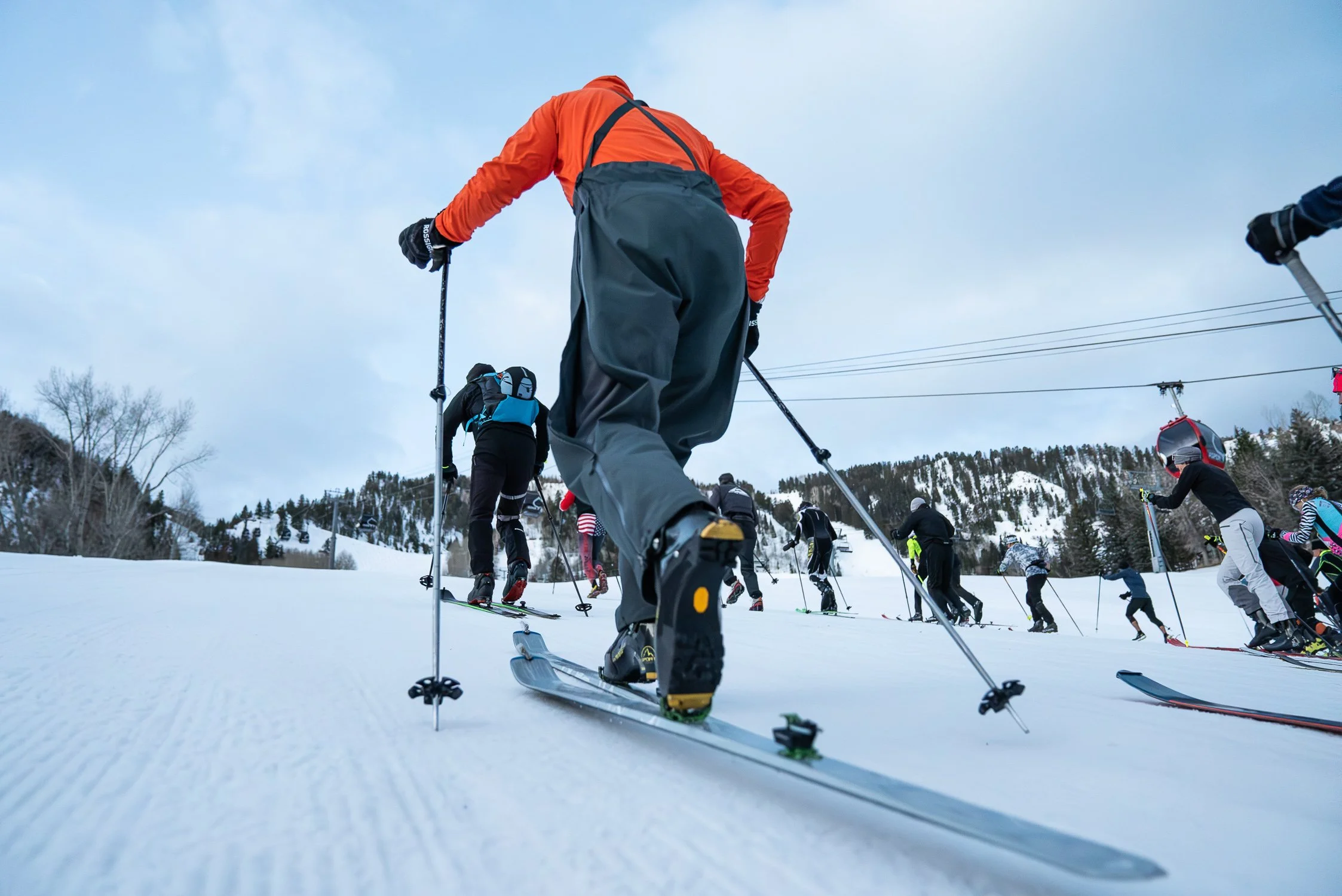
Tech (pin) bindings are the lightest option. Metal pins clip into fittings in the boot toe, and you pivot on those pins as you walk. They're the go-to for long tours, big vert, uphill fitness and anyone counting grams.
Hybrid bindings sit in the middle for weight. They use a pin toe for climbing and a more traditional alpine-style setup for skiing down. They suit skiers who want strong downhill performance without a huge weight penalty.
Features to compare
Release settings. Look at how the binding releases and whether it has adjustable or certified release values. This matters for safety, especially if you ski hard.
Brakes or leashes. Brakes stop a runaway ski on their own. Some light bindings use leashes instead to save weight and reduce failure points.
Climbing heel risers. These prop up your heel on steep skin tracks so you don't have to flex your calves on every step.
Ease of entry. Lining up pins takes practice. Some bindings make it much easier, which helps on cold days and steep transitions. It’s always a good idea to practice at home before setting out.
Compatibility check
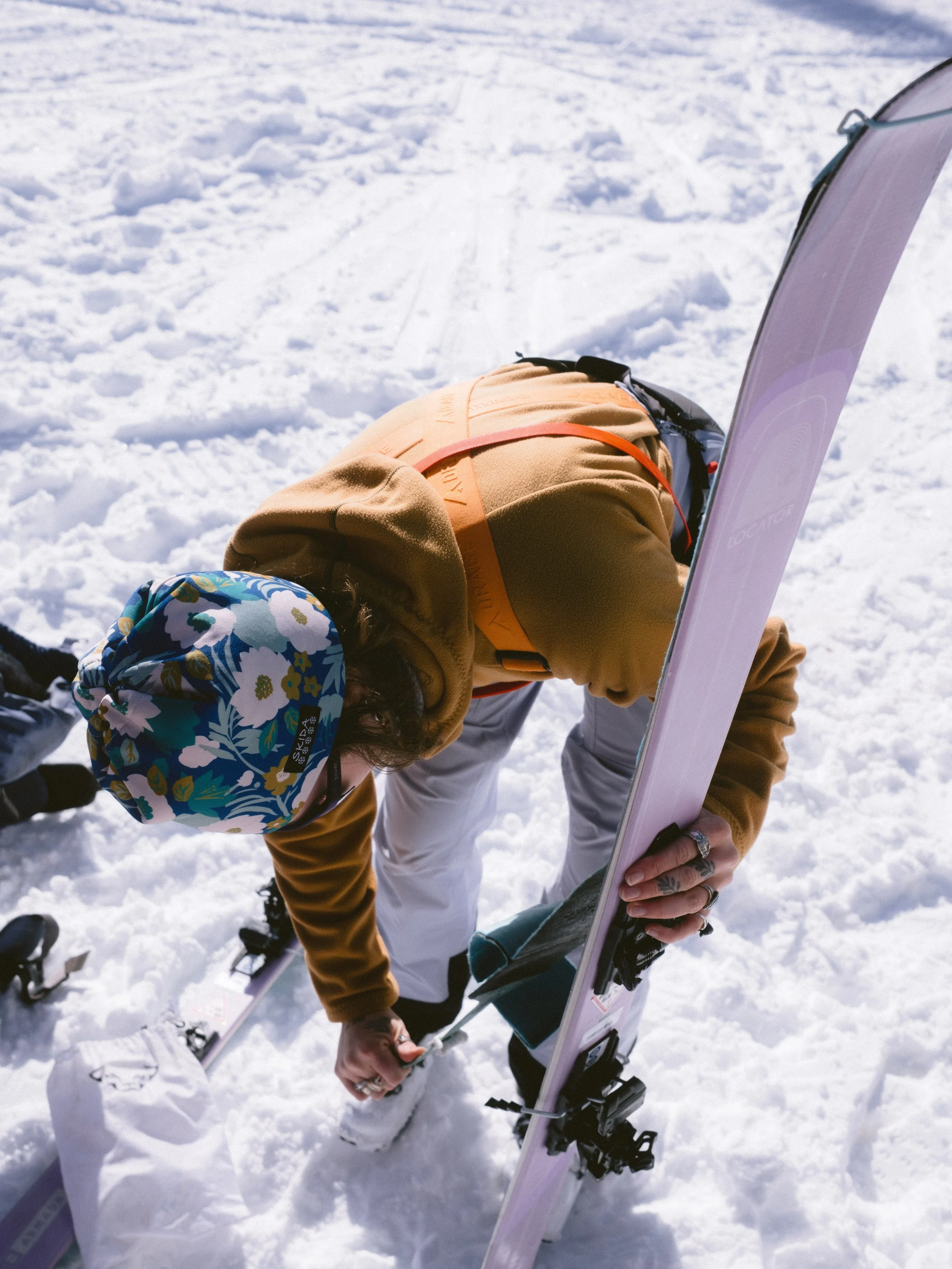
Not every boot works with every binding. Tech and hybrid bindings need boots with tech inserts in the toe, and some bindings require specific sole standards. This is one of the most common gear mistakes, and an easy one to avoid when we build your kit together. Every boot we sell at Ute Mountaineer will work with every binding we carry. However if you are trying to match a boot to a binding you already own or vice versa, be sure to ask one of our associates if they are compatible.
Skins and the rest of the kit
Boots, skis and bindings get you started, but a few more pieces finish the kit.
Climbing skins
Skins stick to the base of your skis and grip the snow so you can climb without sliding back. We cut them to fit your exact skis.
Nylon skins grip well and last a long time, but they glide less.
Mohair skins glide more efficiently and pack down small, but they wear faster.
Store skins glue-to-glue or on skin savers, and keep them warm in your jacket on cold days so they stick when you need them.
Poles
Adjustable or collapsible poles let you shorten them on the descent, lengthen them on long traverses, and strap them to your pack for boot packing. Touring specific poles have features to let you adjust binding heel risers more easily.
Avalanche safety gear
If you're heading beyond the resort boundary, these three pieces go with you on every tour:
Avalanche transceiver (beacon) to find buried partners, or to be found
Shovel that is packable with a metal blade
Probe sized for the terrain you’re skiing
Gear is only part of it. Take an avalanche course, check the local avalanche forecast before every tour, and practice with your partners.
Don't forget
A touring-specific pack, a helmet, ski crampons for firm spring snow, layers you can shed on the climb, and a puffy for transitions. Plus hydration, snacks, and a reliable communication device.
What kind of touring skier are you?
Here's how a kit typically comes together for four common types of skiers. Think of these as starting points; your fitting and goals will fine-tune the details.
The dawn patroller skins resort uphill laps before work. Their kit pairs a light boot with a big walk range, light and narrow skis around 85–95 mm, a minimal tech binding, and mohair or mix skins for glide.
The all-arounder does a bit of everything. They do best with a mid-weight boot that still has solid downhill power, a versatile ski around 95–105 mm, a tech binding with brakes and adjustable release, and nylon–mohair mix skins.
The powder hunter chases storm days and deep backcountry snow. Their kit starts with a stiff freeride touring boot, then adds a wide, stable ski around 105–115 mm, a burlier tech or hybrid binding, and mix or nylon skins for grip.
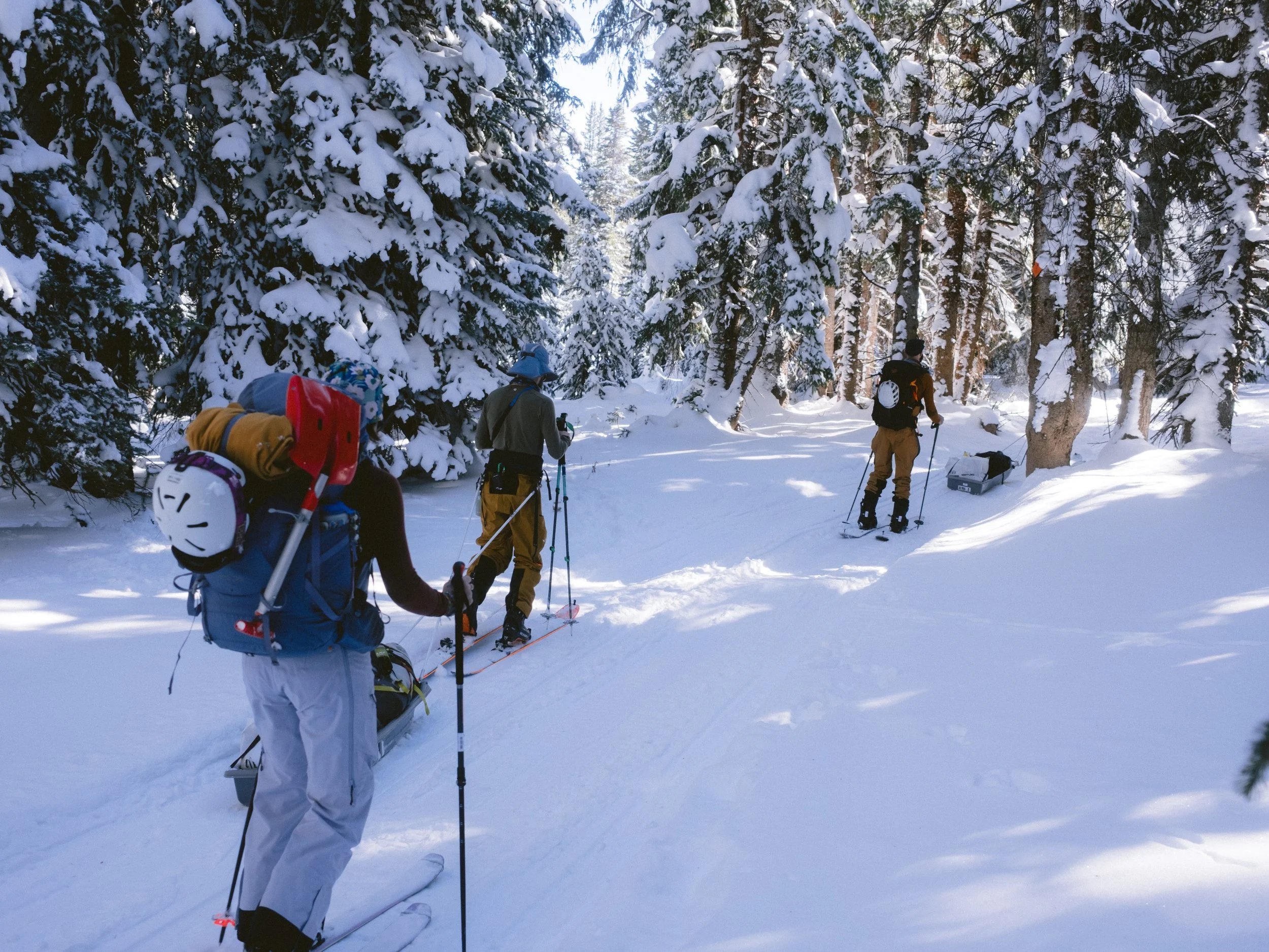
The hut tripper heads out on multi-day tours with a heavy pack. Comfort and warmth come first in the boot, paired with a mid-width ski around 90–100 mm, a reliable tech binding and mix skins for long days.
Widths are approximate and vary by brand and model.
Not ready to invest? Rent first!
If you're new to touring, renting is a smart first step. It lets you:
Find out how much you enjoy skinning before you buy a full setup
Try different boot, ski and binding combinations
Learn what you like (and don't) so your eventual kit is a better fit
Test gear for a specific trip, like a hut trip or spring tour
Ute Mountaineer has a great selection of uphill setups to rent. Check our website for the full list of winter rentals.
Let's build your kit
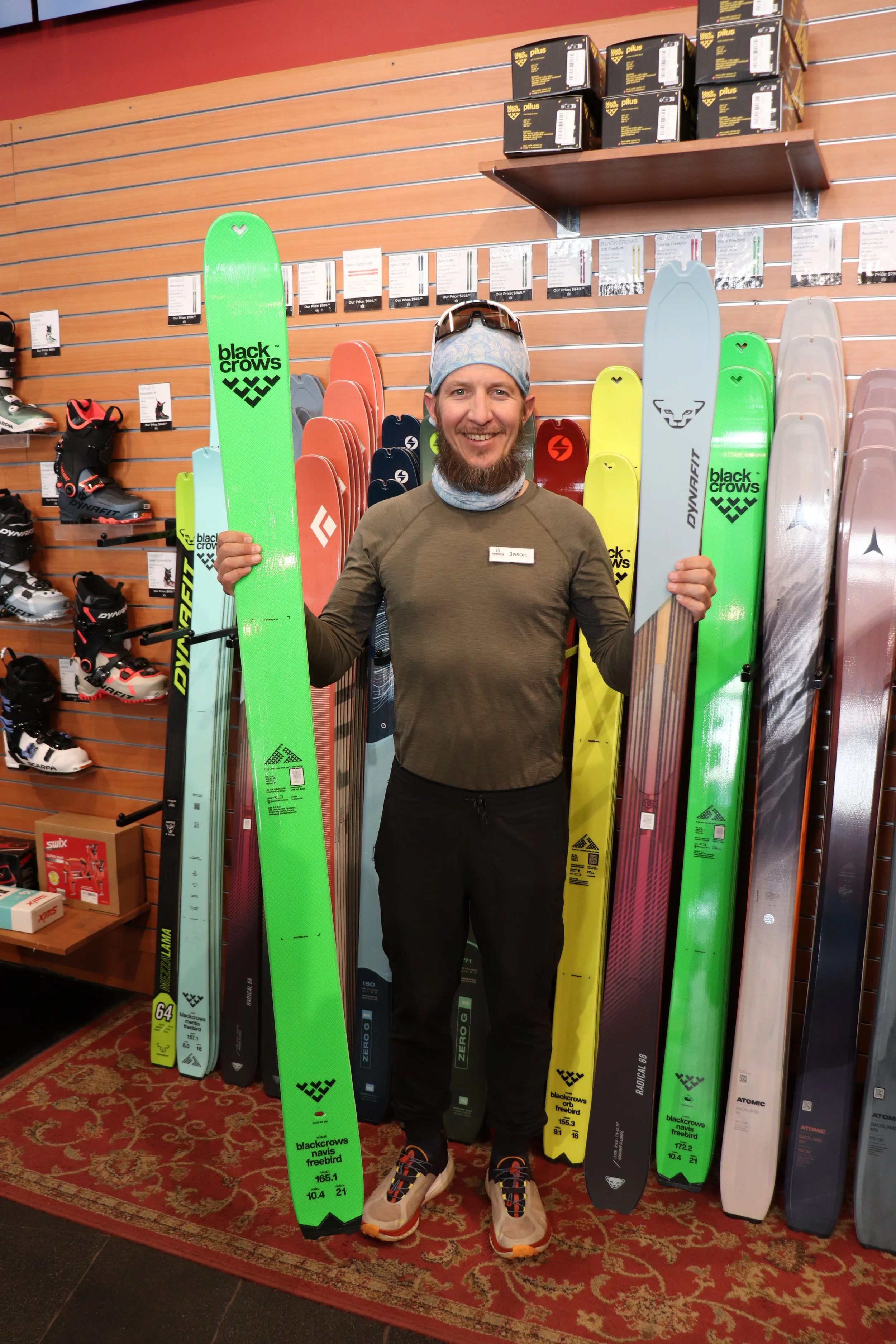
The best way to build an AT kit is in person, with people who tour these mountains. Bring your goals, your questions and any gear you already own. We will get you fitted in a setup that climbs well, skis well and feels like it was made for you.
